

The best work-study graphic design master's degree
Share
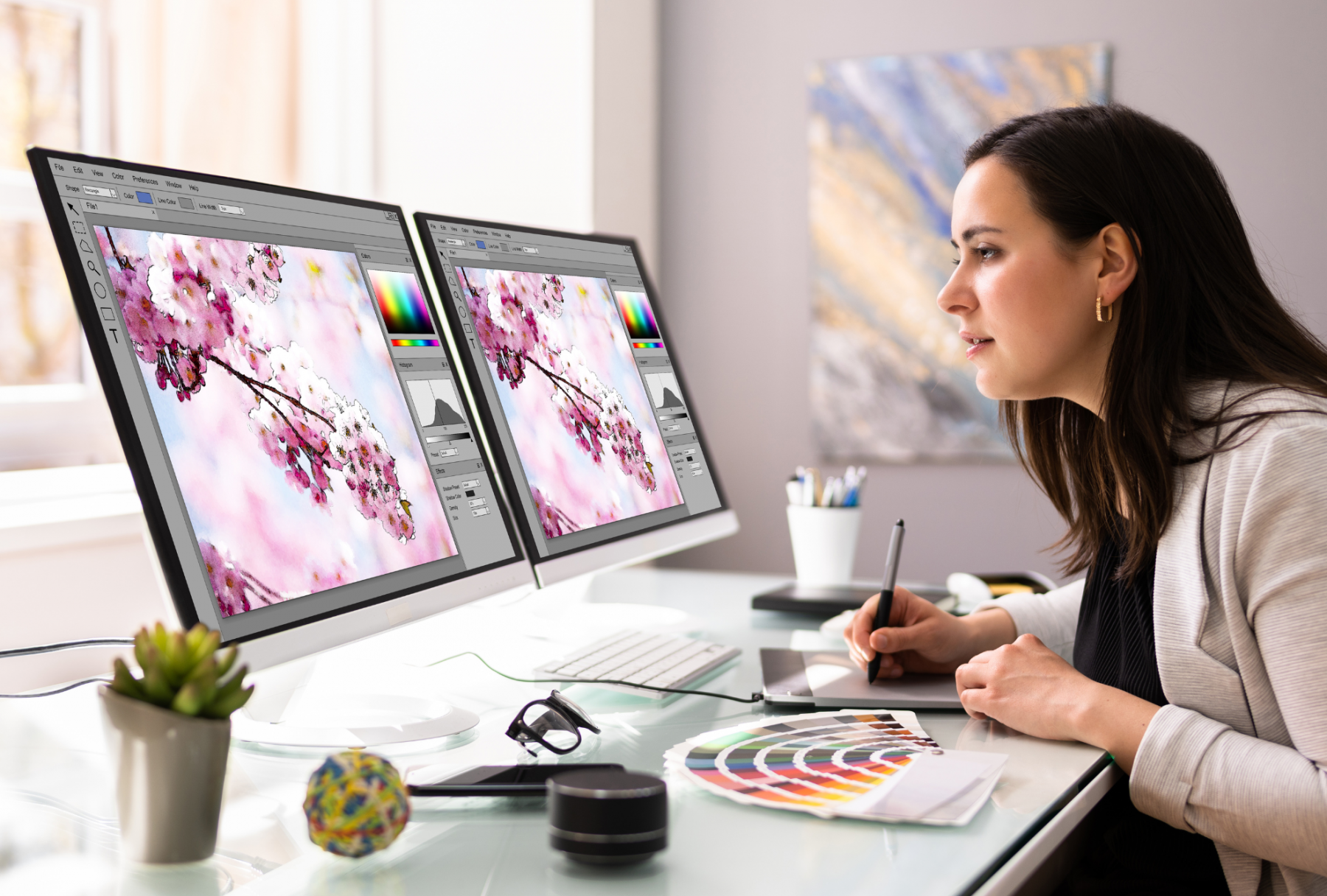
The Master's program in Graphic Design, offered as a work-study program, is a high-level course that combines theory and practice, allowing students to specialize in the field of design while gaining significant professional experience. This program is particularly valued for its immersive approach, which effectively prepares future graphic designers to enter the job market with a solid and relevant skillset.
This course is aimed at students who already have a background in design or applied arts and who wish to deepen their skills while applying them in a real professional context. By alternating between periods in business and in school, students develop not only advanced technical skills but also a deep understanding of the strategic issues of graphic design in the professional world.
The objectives of the work-study graphic design master’s degree
Development of technical and strategic skills
The work-study Master's program in Graphic Design aims to train professionals capable of designing and managing complex design projects. Students are encouraged to develop their creativity while mastering the tools and techniques necessary for the completion of graphic projects. This includes the design of logos , visual identities, communication materials, and the use of the latest digital design technologies, including AI-powered graphics.
In addition, the training places a strong emphasis on the strategic dimension of design. Students learn to analyze customer needs, develop creative concepts that respond to specific issues, and manage the production of these concepts until their final realization. This dual skill, technical and strategic, is essential to meet the expectations of modern companies, which see design as a lever for differentiation on the market.
Professional immersion through work-study
One of the main advantages of the work-study master's program in graphic design is the opportunity for students to integrate into a company throughout their studies. This learning model allows them to combine the acquisition of academic skills with practical experience in a professional setting. Students thus spend several days a week in a company, where they directly apply the knowledge gained in class.
This work placement is crucial for developing a concrete understanding of graphic design professions . Students learn to manage real projects, work in teams, meet tight deadlines, and adapt to client requirements. Furthermore, this professional experience is a true springboard for entering the job market, as it allows them to build a professional network while strengthening their self-confidence and belief in their abilities.

The work-study graphic design master's program
A complete and diversified curriculum
The work- study master's program in graphic design is designed to cover all aspects of graphic design, from print to web , including motion design and UX/UI design. Students participate in theoretical courses, practical workshops, and creative competitions , often led by working professionals.
Over the course of the two-year program, students are also invited to work on multidisciplinary projects that allow them to put their skills into practice in diverse contexts. These projects provide an opportunity to develop innovative creative proposals while learning to manage the complexity of design projects in terms of planning, team coordination, and budget management.
The place of artificial intelligence in graphic design
With the emergence of new technologies, AI is playing an increasingly important role in the field of graphic design. The work-study Master's program in graphic design incorporates this dimension by offering modules dedicated to the use of artificial intelligence in graphic creation. Students learn to use AI tools to generate concepts, optimize their workflows, and create customized designs based on client needs.
This training allows future designers to familiarize themselves with the latest technological innovations, giving them a competitive advantage in the job market. Integrating AI into the creative process is not only a time saver, but also a way to explore new forms of graphic expression.

The advantages of the work-study graphic design master’s degree
Professional training leading to a diploma
The Master's degree in Graphic Design, offered through a work-study program, provides a dual advantage: the acquisition of a state-recognized, industry-approved, five-year post-secondary diploma, and significant practical experience. This degree is a guarantee of competence for employers, who seek candidates capable of combining technical expertise with strategic vision.
In addition, work-study training allows students to receive remuneration while continuing their studies, which is a significant financial advantage. In addition, this formula facilitates integration into the job market, as graduates already have solid professional experience and a network of contacts in the design sector.
Facilitated professional integration
Graduates of a master's program in graphic design with a work-study component generally find employment quickly after completing their studies. The reason is simple: the experience gained in the workplace, combined with the quality of the education received, allows them to be immediately operational upon entering the job market. They can thus access a wide range of graphic design professions , whether as a graphic designer , art director , UX/UI designer , or motion designer.
Furthermore, the versatility of the skills acquired during the training opens doors in various sectors, ranging from communications agencies to the marketing departments of large companies, including the cultural and artistic sector.
How to integrate a work-study graphic design master's degree
Admission criteria
To enroll in a work-study Master's program in graphic design , applicants typically need a bachelor's degree (or equivalent) in a field related to design, applied arts, or visual communication. Applicants must submit an application including a portfolio , a cover letter, and sometimes participate in a selection interview.
Schools primarily assess the quality of submitted work, the coherence of the academic record, and the applicants' motivation to undertake a demanding yet rewarding program. Some institutions may also require specific skills in design software or AI graphics.
Alternation options
Students have the option of pursuing work-study training in graphic design through various programs, such as apprenticeship contracts or professional training contracts. Each type of contract has its own advantages and terms, but all allow students to combine their studies with professional experience.
Schools, such as the Paris campus design school Intuit Lab , often support students in their search for companies through placement services, online platforms, and coaching sessions. This assistance is invaluable for finding a host company that aligns with the student's career aspirations.
The Master's in Graphic Design (work-study program) is a top-tier program that prepares future designers to meet the challenges of the professional world. Through a combination of theoretical courses, practical projects, and company placements, this program offers comprehensive and versatile preparation for careers in graphic design . For those seeking to specialize while gaining valuable professional experience, this program represents a unique opportunity to combine academic learning with hands-on experience. If you are interested in this path, explore the graphic design program further to discover how it can fulfill your creative and professional ambitions.