


Illustrator job description: tasks, studies and salary
Share
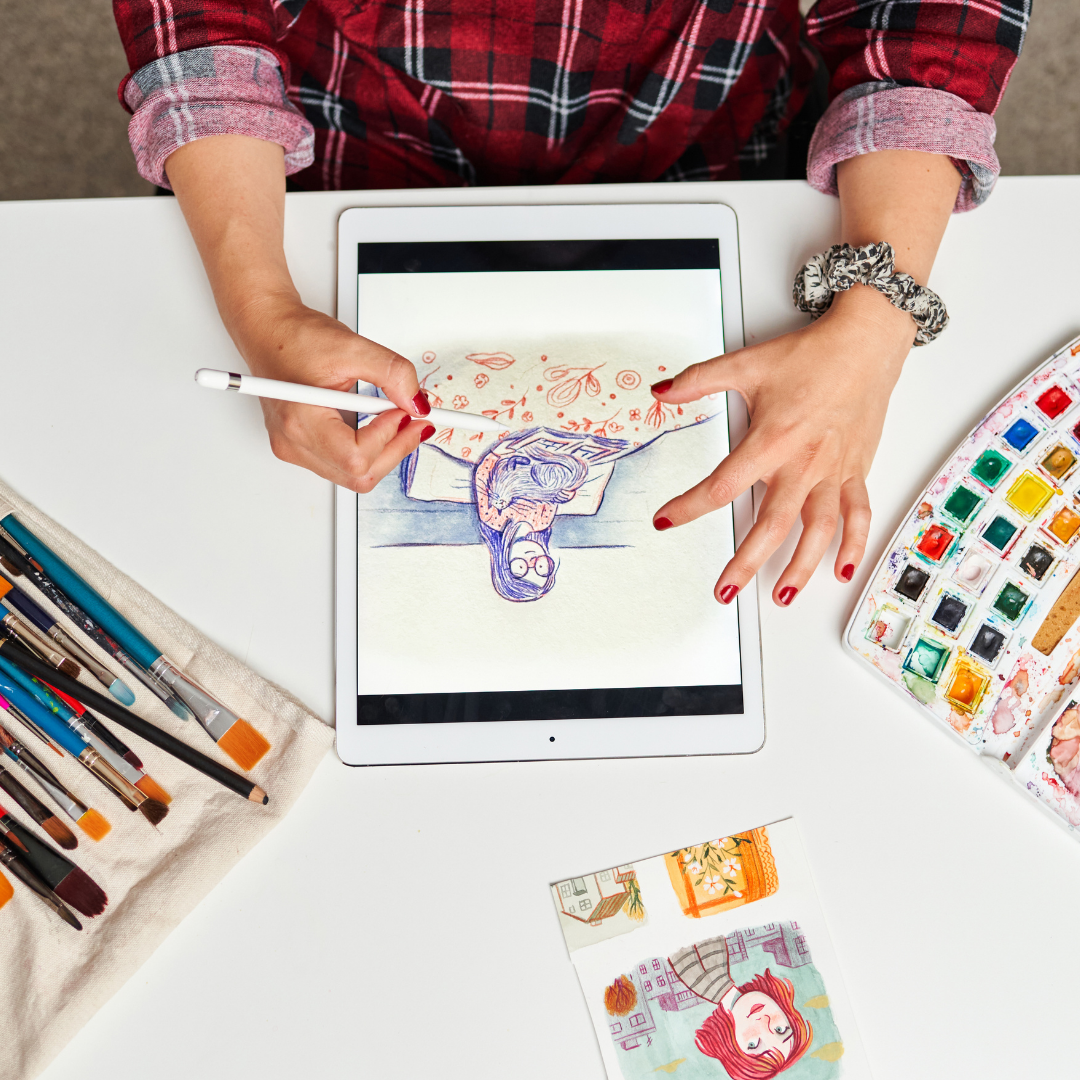
The illustrator job description remains one of the most sought-after by young creatives who dream of making a living from their passion for drawing. The profession is as attractive as it is daunting: creative passion on the one hand, and a sometimes precarious economic reality on the other. This guide details precisely what an illustrator does on a daily basis, what skills distinguish them, how much they earn depending on their status and experience, which training programs effectively prepare them for the profession, and which sectors will be hiring the most in 2026.
What is an illustrator in 2026?
An illustrator is a professional who creates original images for communication, publishing, entertainment, or artistic purposes . Unlike a visual artist, who primarily creates for their own enjoyment, an illustrator always works from a brief: one from a publisher, art director, brand, or individual client. The constraints of the brief are what fundamentally distinguish the two professions.
The scope of work has expanded considerably since the advent of digital technology. An illustrator in 2026 might work for a children's book publisher on Monday, produce visuals for a video game on Tuesday, design a magazine cover on Wednesday, animate stickers for a brand on Thursday, and create NFTs on Friday. This versatility has become the norm, particularly among freelance illustrators, who represent the vast majority of professionals in the sector in France.
The arrival of generative AI (Midjourney, DALL-E, Stable Diffusion) has transformed the market since 2022. Less specialized illustrators (icons, stock images, generic decorative visuals) are seeing their commissions decline. Conversely, illustrators with a strong visual signature, a solid cultural background, and the ability to tell stories maintain their value—or even see it increase as AI visuals saturate the market with standardized content. This context is part of the broader evolution of design professions , where AI is reshuffling the deck by valuing artistic vision over mere execution.
The main tasks of the illustrator
The tasks vary enormously depending on the sector of activity and the type of client. Five main areas structure the daily work of most professional illustrators.
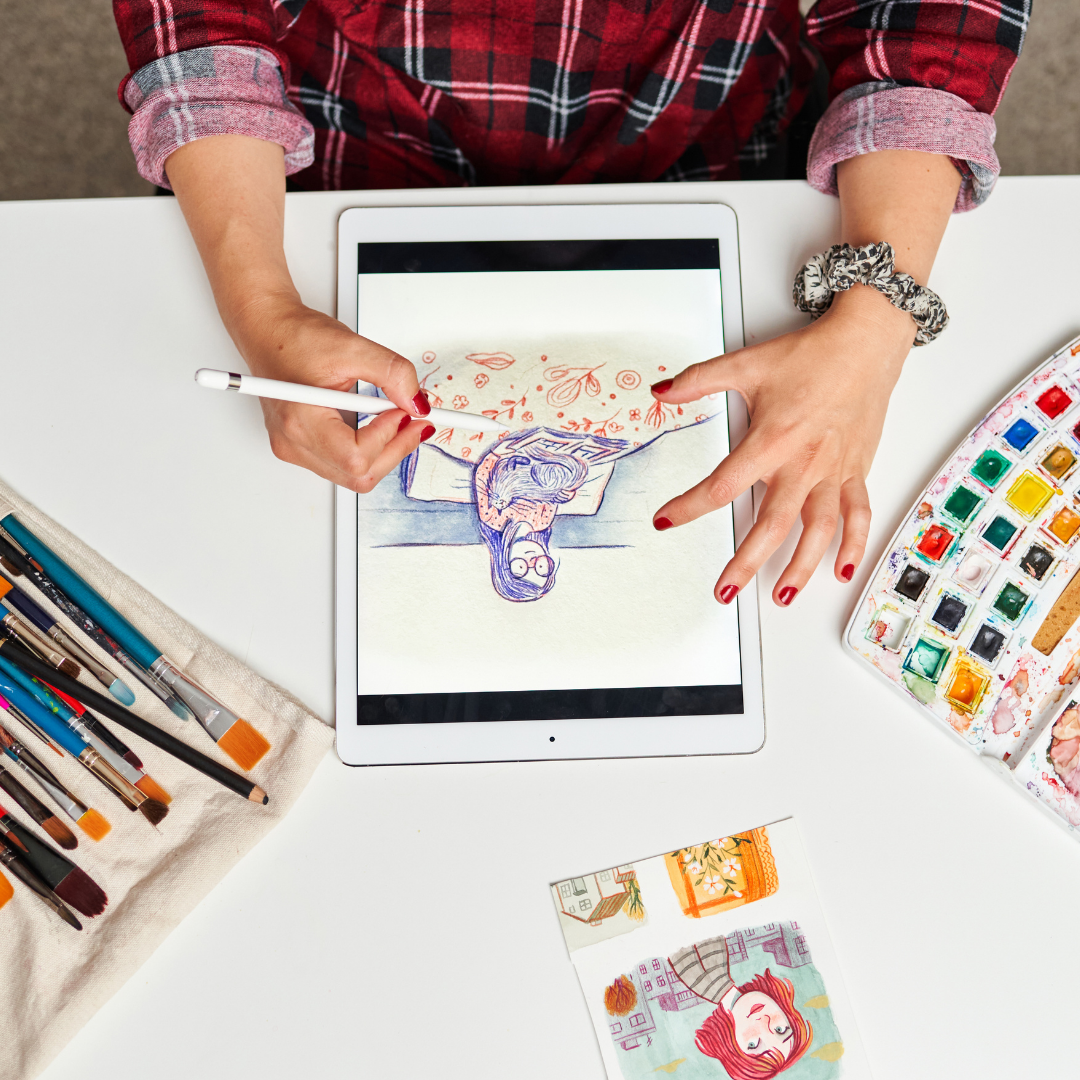
1. Analyze the brief and research references
Every project begins with understanding the client's needs: target audience, message to convey, desired visual style, and technical constraints (format, resolution, distribution platform). The illustrator then creates a visual reference library to establish the style before drawing. This phase represents 15 to 25% of the total project time.
2. Propose preliminary research and sketches
Before the final illustration, the illustrator produces several rough sketches to allow the client to choose the direction. These sketches determine the composition, framing, and narrative angle. This is the most intellectual stage of the work—and often the one where the longest back-and-forth with clients takes place.
3. Create the final illustration
Once the concept is approved, the illustrator creates the final illustration: clean drawing, coloring, textures, and finishing touches. Depending on the style and technique chosen, this phase can take a few hours for a simple illustration or several days for a complex piece. The technique used (digital, traditional, mixed) directly influences the final result and the price.
4. Deliver usable files
A professional illustrator always delivers print-ready or web-ready files according to the client's specifications: good format (TIFF, PSD, AI, PNG, JPG), good resolution (300 DPI for print, 72 DPI for web), and good color space (CMYK for print, RGB for digital). Technical mastery of this phase distinguishes a professional from an amateur.
5. Manage contractual and commercial aspects (as a freelancer)
A freelance illustrator spends between 20 and 30% of their time on non-creative tasks: prospecting, quotes, negotiation, contracts, invoicing, follow-ups, accounting, and monitoring copyright laws. This reality is often underestimated by beginners and partly explains why income in the first few years remains modest.
The illustrator's key skills
The profession is structured around six skill sets. Good candidates combine all six to varying degrees.
Mastery of drawing
A non-negotiable skill, even in the digital age. An illustrator must master the fundamentals: anatomy, perspective, composition, color theory, and values . These basics are acquired through years of regular practice, often beginning in high school or even earlier. No amount of software can compensate for a poorly constructed drawing.
Visual culture and references
A good illustrator is familiar with the history of illustration (Rockwell, Sempé, Blexbolex, Blutch, Lorenzo Mattotti, Hayao Miyazaki, Yuko Shimizu), contemporary trends, and the specific references of each sector (children's illustration, publishing, video game concept art, scientific illustration). This knowledge enriches creative proposals and allows for intelligent dialogue with art directors.
Developing a personal style
This is the major differentiating factor. Illustrators who make a good living from their work all have an identifiable visual signature —a style recognizable in three seconds. Developing this style generally takes three to seven years of intensive practice, experimentation, and personal research.
Mastery of visual storytelling
A successful illustration tells a story. An illustrator must know how to compose an image that captures attention, guides the viewer's gaze, and conveys an emotion or idea in a fraction of a second. This narrative skill distinguishes professional illustrators from merely technically gifted draftsmen.
Project management and rigor
Respect for deadlines, the ability to incorporate corrections without losing quality, mastery of the production process, and clear communication with clients. These non-creative skills often determine client loyalty—a technically average but reliable illustrator works harder than an unmanageable genius.
Commercial and administrative skills (freelance)
For the 85% of illustrators who work independently, mastering the business aspects (pricing, contracts, rights transfers, VAT, author status, social security contributions) is essential for financial survival. These skills are rarely taught in school and are often acquired through hardship in the early years.
Essential software and tools in 2026
A professional illustrator typically masters several tools, with a marked preference for one or two of them that define their main workflow.
| Software / Tool | Editor | Cost | Dominant use |
|---|---|---|---|
| Procreate | Savage Interactive | ~€14 (iPad only) | Digital drawing on iPad, fast workflow |
| Adobe Photoshop | Adobe | ~€12/month (Photography plan) | Digital painting, retouching, professional standard |
| Adobe Illustrator | Adobe | ~€24/month | Vector illustration, logos, icons |
| Clip Studio Paint | Celsys | ~€50 one-time purchase | Manga, comics, narrative illustration |
| Chalk | KDE (open source) | Free | A professional alternative to Photoshop |
| Affinity Designer | Serif | ~€70 one-time purchase | An alternative to Illustrator without a subscription |
In terms of equipment, the essentials are a Wacom graphics tablet (Intuos for beginners, Cintiq for professionals) or an iPad Pro with Apple Pencil , which has gained considerable popularity since 2020. Some illustrators still work extensively with traditional media (watercolor, ink, gouache) and then scan their originals to finalize them digitally. This hybrid approach produces results that are particularly sought after in children's publishing.
Illustrator salary by experience and status
Income varies enormously depending on status, sector, and reputation. The ranges below are indicative, with very significant discrepancies in reality.
Salary as an employee
| level of experience | Annual gross salary | Estimated net monthly salary |
|---|---|---|
| Junior (0-2 years) | 24 - 000 € | 1 - 600 € |
| Confirmed (3-5 years) | 32 - 000 € | 2 - 100 € |
| Senior (5-10 years old) | 45 - 000 € | 2 - 950 € |
| Art director illustration | 55 - 000 € | 3 - 600 € |
Salaried positions are mainly found in animation studios, communication agencies, publishing houses, video game studios, and newsrooms . They represent a minority of the market but offer financial security that is difficult to obtain as a freelancer.
Freelance income
The vast majority of French illustrators work freelance under the status of author (Maison des Artistes or Agessa before their merger in 2019 under the Urssaf Limousin). Average income:
- Beginner (1-3 years) €70,000 to €150,000 net per year
- Confirmed (3-7 years) €70,000 to €150,000 net per year
- Recognized senior (7+ years) €70,000 to €150,000 net per year
- Industry stars €70,000 to €150,000 net per year
Daily rates (TJM) range from €250 excluding VAT for a beginner to €600 excluding VAT for a senior specialist . For comparison with related creative professions, the web designer job description details digital design salaries, which are generally higher for equivalent experience due to stronger industry demand.
Market reality: approximately 40% of professional illustrators in France combine their main activity with supplementary income (teaching, leading workshops, selling merchandise). This is an important factor to consider in your career plan: the profession of illustrator alone is sufficient to provide a comfortable living for only a portion of professionals.
How to become an illustrator
There is no mandatory training to practice as an illustrator, but in practice, the vast majority of professional illustrators have attended a specialized school. Several paths coexist.
Private illustration schools
Recognized for their focus on specific professions and their high job placement rates. The main ones in France: École Émile Cohl (Lyon), École Pivaut (Nantes, Rennes), LISAA (Paris, Rennes, Bordeaux, Nantes, Strasbourg, Toulouse), Autograf (Paris), École Brassart . Programs generally last 3 to 5 years, with annual tuition fees of €7,500 to €10,500.
Public art schools
A more selective but financially accessible path. The best for illustration: École Estienne (Paris), ENSAD (Arts Décoratifs Paris), HEAR (Strasbourg), ESAD Strasbourg, Beaux-Arts de Nantes . Programs last 3 to 5 years, university registration fees (~€500 per year).
The DN MADE specializing in illustration
A three-year state-recognized diploma (equivalent to a Bachelor's degree) offered by several public high schools and art schools. Provides a solid general foundation with the option to continue with a DSAA or DNSEP afterward. Moderate cost, admission based on application via Parcoursup.
Bachelor's and Master's degrees in design schools
Design schools specializing in illustration or visual communication offer a broader education (illustration + graphic design + digital) that increases career opportunities. This is useful for those who want to expand their skillset beyond editorial illustration alone. The dedicated article on becoming an illustrator details the criteria for choosing between these different paths.
The self-taught path
Rare but possible. Some professional illustrators haven't had formal training but have built their skills through intensive practice, online tutorials, and above all, the creation of a remarkable portfolio. This path requires exceptional discipline and above-average talent to compensate for the lack of a formal school network.
Career opportunities and sectors that are hiring
The opportunities are divided into eight major sectors, with very different dynamics depending on the period.
Promising sectors in 2026
- Children's edition : strong historical sector in France (Bayard, Gallimard Jeunesse, L'École des Loisirs, Milan), stable demand
- Video game : concept art, character design, key visuals — a growing sector
- Animation Visual design, graphic development, backgrounds
- Graphic publishing and adult comics Casterman, Delcourt, Dargaud, Sarbacane, 2024 Editions
- Editorial press Illustrations for magazines and newspapers (Libération, Le Monde, L'Obs, XXI)
- Advertising and brands Visual campaigns, packaging, illustrations for brand content
- Scientific and educational illustration : stable and lucrative niche
- Merchandising and applied arts Illustrations for merchandise, textiles, stationery
Sectors in difficulty since 2022
- Generic corporate illustration (corporate blogs, presentations, social networks): massively replaced by generative AI
- Standard icons and pictograms : saturated market, very low margins
- Stock illustration (Shutterstock, iStock): Revenues have collapsed since the arrival of AI
The illustrators who will succeed in 2026 are those who have positioned themselves in high-value niches: author illustration, ambitious publishing projects, video game art direction, and personal narrative universes. Differentiation through style is more than ever the only lasting defense against the homogenization brought about by AI.
Are you considering a career in creative illustration?
The most successful illustrators in 2026 combine a strong personal visual signature with a solid design background. Intuit Lab provides training in the fundamentals of graphic design and illustration at its design schools in Paris and Marseille, with individualized portfolio support.
F.A.Q
What is the average salary of an illustrator in France?
A starting illustrator earns between €24,000 and €32,000 gross per year, an experienced illustrator between €32,000 and €42,000, and a senior illustrator between €45,000 and €60,000. Freelancers (the most common status) earn average incomes from €15,000 to €25,000 net per year for a beginner to €40,000 to €70,000 for a well-established senior illustrator. The average daily rate (AJM) varies between €250 and €600 excluding VAT, depending on experience.
Is it possible to make a living as an illustrator in France?
Yes, but the first few years are usually financially difficult. Around 40% of professional illustrators supplement their work with additional income (teaching, workshops, merchandise). Making a comfortable living from illustration alone takes, on average, 5 to 8 years of professional development after graduation.
What studies are required to become a professional illustrator?
The main pathways are: private illustration schools (Émile Cohl, Pivaut, LISAA, Autograf), public art schools (Estienne, ENSAD, HEAR), a DN MADE (National Diploma in Arts and Design) with a specialization in illustration, or a Bachelor's and Master's degree from a design school with a specialization in illustration. Self-teaching is possible but rare; it requires exceptional discipline and a remarkable portfolio.
What status should I choose to be a freelance illustrator?
The vast majority operate under the status of artist-author (Urssaf Limousin since the merger of Maison des Artistes and Agessa in 2019). This status offers a tax system tailored to artistic income but limited social security coverage. Some illustrators choose micro-enterprise or EURL status to diversify their activities beyond simply selling copyrights.
Will AI replace illustrators?
AI has already replaced part of the market (generic corporate illustration, stock images, standard icons). It doesn't replace illustrators with a strong visual signature, a solid narrative culture, and personal styles. The illustrators who succeed in 2026 have positioned themselves in high-value niches where AI remains unable to compete: art direction, author illustration, and ambitious editorial projects.
What equipment do I need to get started in illustration?
Minimum requirements: a Wacom Intuos graphics tablet (around €80) or an iPad with Apple Pencil, Photoshop or Procreate, and a recent computer. Expect to pay between €1,000 and €2,500 for a complete professional setup, up to €4,000 with a Cintiq-type tablet screen. Many illustrators also work traditionally (watercolor, ink) with modest equipment.
Which sectors are recruiting the most illustrators in France?
Children's publishing (a strong historical sector), video games (growing concept art), animation, graphic design and adult comics, premium editorial press, advertising, and brand content. Sectors struggling since the arrival of AI: generic corporate illustration, stock illustration, and standard icons and pictograms. The highest-paying sector remains international AAA video games.